Conditions Mpox
ICD codes: B04 What are ICD codes?
Mpox (formerly called “monkeypox”) is a disease caused by a virus. In general, those who contract the disease don't become seriously ill. The virus often causes a distinctive skin rash. To date, infections with mpox have been rare in Germany.
At a glance
- Mpox is a viral disease that is mild in most cases.
- Mpox is common in some countries in Africa. Cases of the virus are rare in Germany.
- Mpox is spread from animals to humans or from person to person through close physical contact.
- Babies and children, people with a weakened immune system, pregnant women and older people are at an increased risk of becoming seriously ill with the virus.
- Various hygiene and other precautionary measures can prevent transmission.
- In some cases, a vaccine can prevent symptoms from developing in a person who has had close contact with an infected individual.
What is mpox?
Mpox is a rare viral disease caused by the mpox virus (also known as monkeypox virus or MPXV). Mpox is related to the classic smallpox and cowpox viruses. The mpox virus is currently widespread in countries in West and Central Africa. Cases of mpox have been increasing globally since 2022.
In West and Central Africa, the virus is particularly prevalent among rodents and can spread from these to humans. Despite its previous name, mpox is fairly rare in monkeys. In Germany, mpox is usually spread by close physical contact between people.
There are different variants of the mpox virus, each with varying degrees of severity. Almost all cases that have occurred to date in Germany have been infections with milder variants.
What are the symptoms?
Initial symptoms typically appear between 5 to 21 days after contracting mpox. However, in some people, the first signs are seen after just 1 to 4 days.
Mpox may cause general symptoms of an infection, such as:
- fever and shivering
- headaches
- muscle and joint pain
- swollen and painful lymph nodes
People typically develop a painful rash of flat lesions (sores) that develop into fluid-filled blisters. Over time, these crust over and fall off. The rash is typically concentrated around the area where the virus entered the body. Depending on the site of infection, the rash may occur in the genital area, around the anus, on the face, on the palms of the hands or the soles of the feet. However, changes may also be found on the skin and mucus membranes of the mouth or eyes. Scars sometimes remain after the rash has healed.

Symptoms usually last between 2 and 4 weeks and, in most cases, clear up on their own without treatment. People can pass the virus on to others for as long as they have symptoms.
The risk of a severe infection is increased among babies and children, people with immune deficiency, older people and pregnant women. Fatalities sometimes also occur among these groups in parts of Africa where mpox is particularly widespread.
In some cases, an infection with mpox causes no symptoms at all.
Good to know: Mpox produces symptoms similar to those of smallpox, which was eradicated in 1980, although these are usually much milder in mpox. Despite this, severe and fatal outcomes are possible.
How do people catch mpox?
The virus can be transmitted from person to person through close contact, for example:
- contact with the fluid from inside the blisters or scabs associated with the distinctive skin rash
- contact with ulcers or wounds in the mouth
- contact with body fluids, such as saliva
Important: The amount of virus concentrated in the lesions is especially high. The risk of contracting mpox is especially high if a person touches the lesions or comes into contact with the fluid inside them.
Mpox can also be spread through contact with clothing, bed linen, handkerchiefs and cutlery used by infected individuals. However, this type of transmission is extremely rare in Germany.
The virus can theoretically be spread before the skin rash appears through respiratory droplets that are expelled when talking. However, this transmission route has not yet been proven.
Pregnant women who have contracted mpox can pass the virus on to their unborn child. The baby may also contract the virus during the birth.
Can mpox be spread through sexual contact?
Mpox can spread from person to person during close physical contact. This also includes sexual contact. For example, a person could contract the virus due to direct contact with skin lesions during sexual activity.
The rash caused by mpox can also occur on the genitals and in the mouth. In such cases, there is an increased risk of viral transmission during sexual contact.
The virus is spread when viral particles come into contact with the mucus membranes lining the eyes, mouth, nose, penis, anus or vagina. However, the virus can also enter the body through tiny cuts or wounds on the skin.
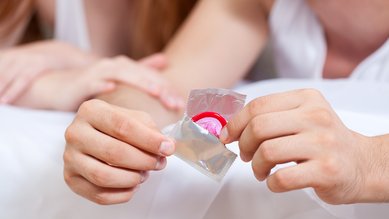
It is not yet clear whether mpox is transmitted by semen or vaginal fluids during sex but it appears that this is possible. For this reason, people who have contracted mpox should use condoms during sex for a period of at least 8 weeks after symptoms have cleared up.
Animal-to-human transmission
In certain regions of Africa where mpox is widespread (endemic), humans can contract the virus as a result of contact with animals who are carriers.
Animal-to-human transmission is possible, for example, through:
- animal bites
- animal body fluids and excretions
- touching dead animals, for example, when hunting
- eating meat that has not been heated to a sufficiently high temperature
How common is mpox?
Mpox is widespread (endemic) in certain countries of Central and West Africa in particular. Cases of mpox have been increasing in other countries across the globe since 2022. Since then, there have been around 3,800 cases of mpox in Germany, with most of these occurring during 2022. Most of those cases involved men who have sex with other men. There have also been some isolated cases since the autumn of 2022. To date, there have been no fatal cases in Germany.
The Robert Koch Institute reports on mpox in Germany and the current situation.
What is the situation worldwide?
In some African countries, the number of mpox cases has increased since 2023. This is also connected with a new virus variant, which has quickly spread through the Democratic Republic of the Congo and neighboring countries in particular. This virus variant, known as clade Ib, causes severe illness. The World Health Organization (WHO) therefore declared a Public Health Emergency of International Concern in August 2024. This enables affected countries to take the necessary measures to prevent further spread of the disease.
In Germany, there is no increased risk due to the new mpox variant at present.
How can an infection with mpox be prevented?
In general, skin contact with people infected with mpox should be avoided. Wounds or blisters of people with the disease should not be touched.

Reducing sexual contact can decrease the risk of contracting mpox. The risk of contracting mpox is increased when wearing little clothing and having skin-to-skin contact with other people – for example in dark rooms or sex clubs.
Is there a vaccine?
In the European Union (EU), a smallpox vaccine to prevent mpox has been approved for adults. This vaccine is less likely to cause side-effects that occur with older smallpox vaccines.
The Standing Committee on Vaccination in Germany (Ständige Impfkommission, STIKO) recommends the vaccine primarily for men who have sex with men (MSM) and change sexual partners frequently.
The vaccine may also be useful if a person has already had close contact with an individual infected with mpox. In this case, the vaccine should be administered as soon as possible and no later than 14 days after contact.
For full immunity, two vaccine doses administered 28 days apart are usually necessary. However, it is still possible to contract mpox despite having received the vaccine. If this happens, the disease is milder and less contagious for other people.
On its website, the Robert Koch Institute provides answers to frequently asked questions relating to mpox.
Further information about the vaccine, how it is administered and which side-effects may occur is provided in the information leaflet that accompanies the IMVANEX/JYNNEOS mpox vaccine.
How can infected individuals avoid infecting others?
Anyone infected with the virus should take certain precautions, including the following:
- Cover the skin rash with clothing, bandages or gloves.
- If you have general symptoms such as high temperature or headaches, maintain physical distance from others and, if contact occurs, ensure that everyone wears a mask.
- Pregnant women, children under 12, people of very advanced age or people with immune deficiency should not stay in the same household as individuals infected with mpox.
- Avoid all forms of close contact – especially sexual contact – with other people until the rash has cleared up and the last scab has fallen off. As of this point, condoms should be worn during sex for another 8 weeks.
- Remain in a separate room from others as far as possible while you have the rash – ideally with access to your own bathroom.
- Avoid sharing bed linen, towels and other items such as dishes with others. Don’t shake out bed linen, as this could release virus particles into the air. When doing laundry, wash at a temperature of at least 60°C and use heavy-duty detergent.
- Observe good hand hygiene and regularly wash your hands thoroughly with soap and water.
- Frequently touched surfaces, such as bedside tables, smartphones or tablets, should be cleaned carefully at least once a day.
- Bath and toilet surfaces should be cleaned after each use.
- Avoid contact with pets to prevent human-to-animal transmission.
- If your health deteriorates at any time, immediately inform your doctor so that supportive treatment can be started if necessary.
In certain cases, people who are diagnosed with an mpox infection are instructed by the local health authority to self-isolate.
Further information and recommendations are provided in the flyer published by the RKI that deals with self-isolation at home for confirmed cases of mpox.
What to do following contact with an infected person
Anyone who has had close contact, such as sexual contact, with a person infected with mpox should contact their local health authority. Close contacts may be able to get a vaccine against mpox.
If you have had close contact with an infected person, you yourself should avoid sex for the time being. You should also avoid contact with pregnant women, young children, people of very advance age and anyone with a weakened immune system. These groups are at an increased risk of becoming seriously ill if they contract an infection.
Pay close attention to any signs of an infection, including non-specific symptoms. Contact a doctor if any symptoms occur. You should inform your medical practice by telephone in advance of your visit or as soon as you arrive that you suspect you may have been infected with mpox.
You can find the relevant local health authority on the website of the Robert Koch Institute.
How is mpox detected?
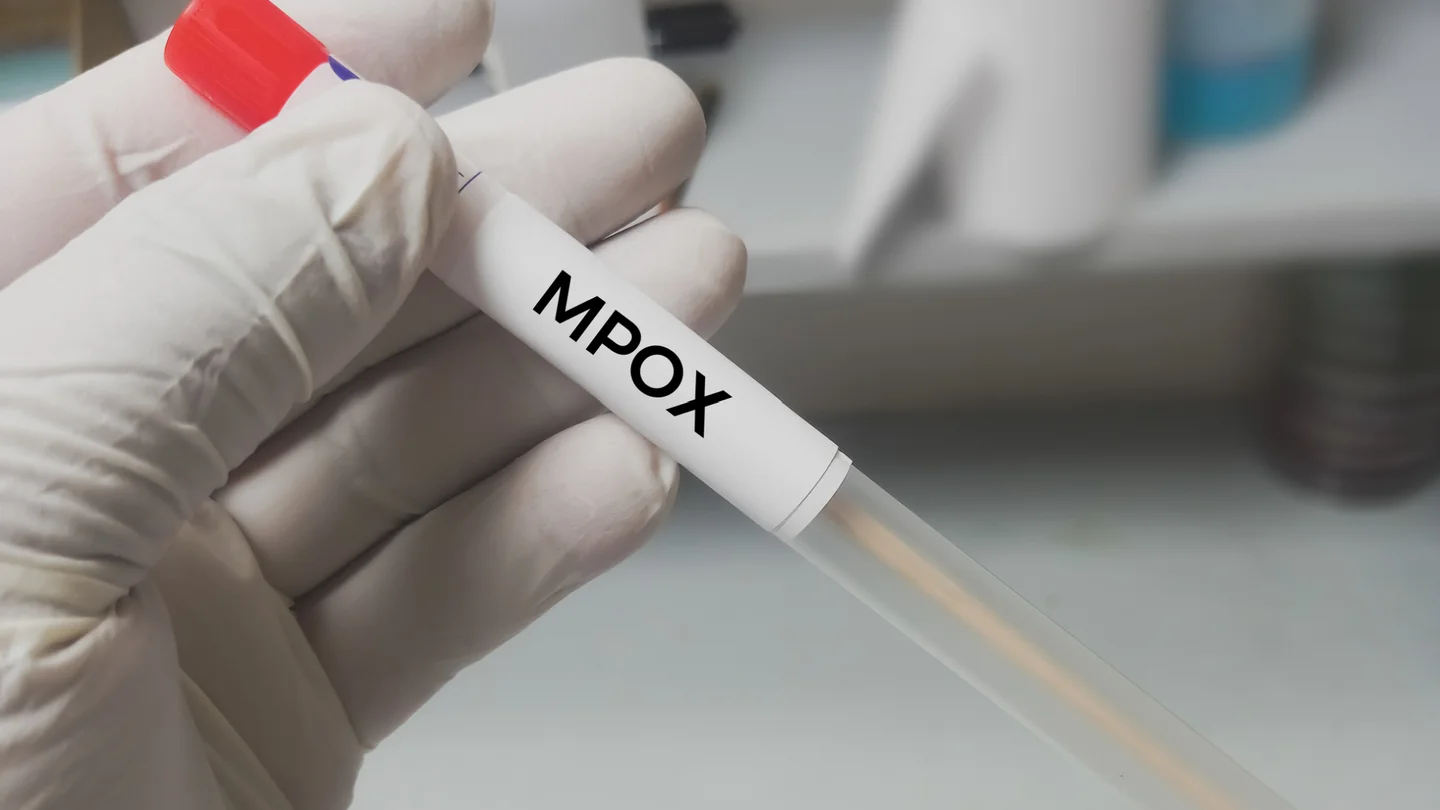
If an infection with mpox is suspected, swabs are normally used to take samples of the fluid inside the lesions. Alternatively, samples may be taken from the crusted-over blisters or, if there is no skin rash, a swab sample may be taken from the back of the throat. The samples are then sent to a lab for analysis. If mpox is detected, a test can also be conducted to determine the virus variant.
How is mpox treated?
Most people who contract mpox recover themselves without treatment within a few weeks. For this reason, therapy usually aims to relieve symptoms such as pain and to treat the skin rash. A power suspension (shake lotion) containing zinc oxide can be applied to the rash.

The rash may cause wounds that can become infected. If this happens, antibiotic medication may be useful. People who become seriously ill may need to be treated in a specialized hospital.
Further information
You will find answers to frequently asked questions about this topic on the website of the Federal Institute for Public Health (Bundesinstitut für Öffentliche Gesundheit, BIÖG) and the website of the Robert Koch Institute.
Further information and recommendations regarding mpox are provided in a flyer published by the Robert Koch Institute (RKI) and the Federal Institute for Public Health (BIÖG).
Addition information about mpox is available on the website of the German AIDS Federation (Deutsche Aidshilfe). The German AIDS Federation also provides information about vaccination.
- Bundesinstitut für Öffentliche Gesundheit (BIÖG). Mpox. Aufgerufen am 29.10.2024.
- Robert Koch-Institut. Flyer für Patientinnen/Patienten und Haushaltsangehörige: Häusliche Isolierung bei bestätigter Mpox/Affenpocken-Infektion. Aufgerufen am 29.10.2024.
- Robert Koch-Institut. Mpox in Deutschland. Aufgerufen am 13.11.2024.
- Robert Koch-Institut. Mpox RKI-Ratgeber. Aufgerufen am 29.10.2024.
- Ständiger Arbeitskreis der Kompetenz- und Behandlungszentren für Krankheiten durch hochpathogene Erreger am Robert Koch-Institut (STAKOB). Hinweise zur Therapie von Mpox. Aufgerufen am 29.10.2024.
- Weltgesundheitsorganisation (WHO). Mpox – African Region. Aufgerufen am 29.10.2024.